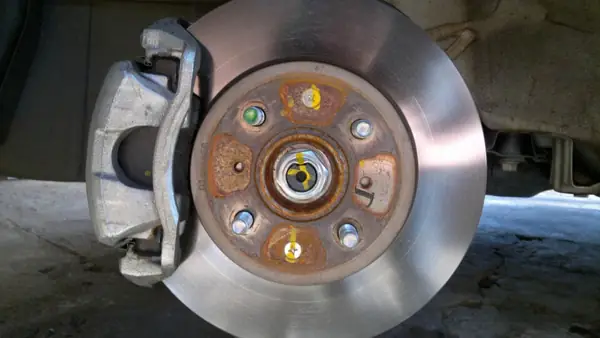
Brake caliper
Hydraulic pressure arrives at the wheel. How does the caliper turn it into pad force?
Uses hydraulic pressure to squeeze the pads against the brake disc.
Pressure moves caliper pistons to apply the pads to the disc. Floating and fixed calipers use different arrangements to apply both sides.
Mounted to the wheel-side suspension assembly, positioned over the brake disc.
Fluid pressure moves a piston. A floating caliper slides to apply both pads; a fixed caliper uses pistons arranged on opposing sides.
Uneven pad wear, dragging or fluid leakage can involve a sticking piston, damaged seal or guide hardware. Other brake faults can produce similar symptoms.
Think it throughCompare the lesson’s two layouts: one caliper slides to apply both pads, while the other has pistons on opposing sides. Which is floating, and which is fixed?
Show the reasoning
The sliding arrangement is floating; the opposing-piston arrangement is fixed. Both use pressure to create pad force, so distinguish the mechanism rather than judging by the caliper’s size or color.
- Trace pressure → piston movement → pad force.
- Use the layout to distinguish caliper types.