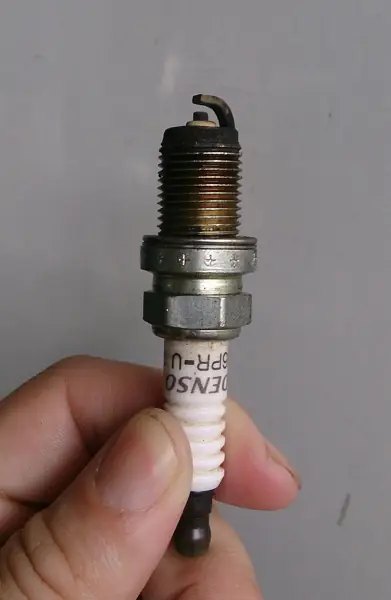
Spark plug
The ignition coil supplies high voltage. Where does the spark actually begin the flame?
Creates the spark that ignites the air-fuel mixture.
A spark plug’s electrodes reach the combustion chamber. High voltage creates a discharge across their gap to begin combustion.
Threaded into the cylinder head. Its electrodes extend into the combustion chamber, while its upper terminal connects to an ignition coil or lead.
High voltage from the ignition coil creates an electrical discharge across the electrode gap. That spark starts the flame in the compressed mixture.
Misfires, rough running and difficult starting can be associated with worn or contaminated plugs, but can also come from fuel, coils or compression.
Think it throughFollow the simplified ignition path: coil → plug terminal → electrode gap. Which item supplies high voltage, and which provides the gap where the spark occurs?
Show the reasoning
The coil supplies the high-voltage pulse; the plug provides the electrode gap in the chamber. A misfire can involve plugs, coils, fuel or compression, so the symptom does not choose one part.
- Connect the plug’s shape to its place in the chamber.
- Treat a misfire as evidence needing context.